More than a website. One operating system.
WordPress is built to publish websites. Planbrand is built to run a business. If your work goes beyond pages and plugins into contacts, delivery, teams, and operations, Planbrand replaces disconnected tools with one structured system.


Familiar. Structured. Connected.
A WordPress‑like page builder, without WordPress complexity
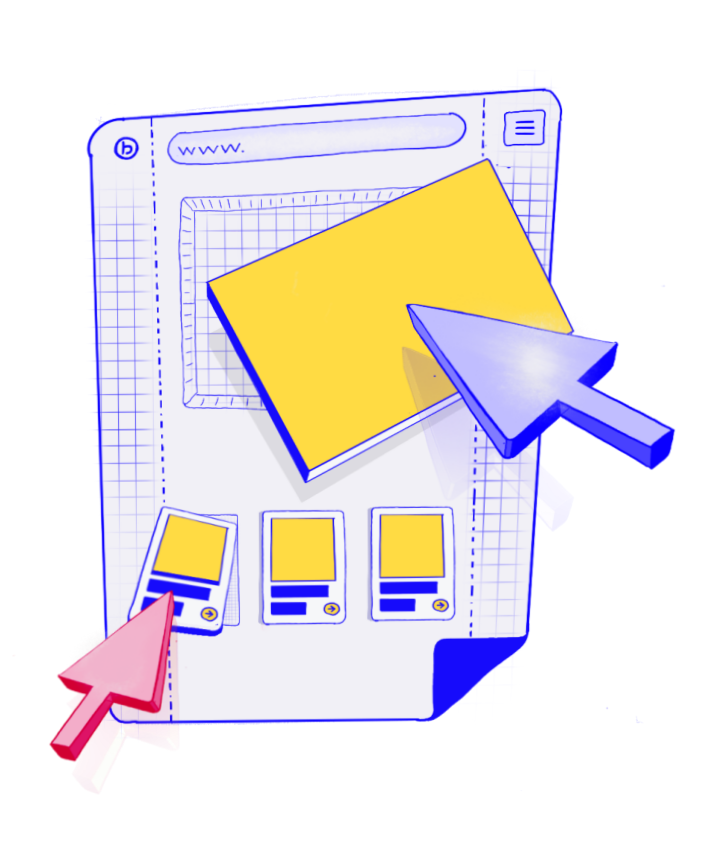
Planbrand’s page builder will feel familiar to WordPress users. It uses ready‑to‑use components, collection‑based dynamic data, and structured brand data. The difference is that everything lives inside one business system — pages, content, CRM, workflows, and teams are connected by default.
Build pages like WordPress
Use ready‑made components and collections, similar to WordPress blocks and templates.
Manage structured brand data
Content is powered by central brand data instead of scattered custom fields and plugins.
Connect pages to operations
Pages link directly to contacts, forms, products, and workflows without integrations.
Scale without plugins
You get WordPress‑style flexibility without plugin conflicts or maintenance overhead.
Beyond plugins and themes
WordPress focuses on building websites with plugins. Planbrand focuses on running a business with everything connected by default.

Business operating system
Pages, contacts, products, and tasks in one system.

No plugin dependency
Core features work out of the box.

Built-in CRM
Contacts and actions stay connected.

Structured workflows
Run delivery and operations with plans and tasks.

Team access control
Roles and permissions without extra plugins.

Scales without rebuilds
Grow without constantly reconfiguring tools.
Beyond websites
Run operations, not plugins
WordPress is excellent for publishing content. Planbrand is built to manage operations, delivery, and growth in one place.
One system
No plugin patchwork.
Operational focus
Built for how businesses actually run.
Team-ready
Roles and access built in.
Scales cleanly
Structure stays intact as you grow.

Planbrand or WordPress: which one actually runs your business?
WordPress is designed to publish and manage websites. Planbrand is designed to run business operations. This side-by-side comparison shows the practical differences when it comes to day-to-day work, growth, and long-term maintenance.
WordPress (plugin-based website)
Website-first focus
Plugins for core features
Content management
CRM via plugins
Manual integrations
Frequent updates & conflicts
Different tools for each job
Custom workflows needed
Limited team permissions
Scaling increases complexity
Developer support required
Security via plugins
Hosting setup required
Email tools external
Payments via add-ons
Hard to standardise work
Data spread across tools
Performance depends on setup
Maintenance grows over time
Website-centric mindset
Planbrand (business operating system)
Business operations first
Core features built in
Pages, products, tasks, and delivery
Native CRM connected to everything
Everything connected by default
Low maintenance system
One unified workspace
Ready-made plans and tasks
Clear roles and access levels
Scaling keeps structure
Usable without developers
Security built into the platform
Managed infrastructure
Email integrated with the system
Brand-level payments supported
Repeatable operational structure
Single source of truth
Performance managed centrally
Maintenance stays predictable
Business-centric mindset
Planbrand vs WordPress
Frequently asked questions
These questions explain the real differences between using WordPress as a plugin-based website and using Planbrand as a full business operating system.
Planbrand vs WordPress
This section answers the most common questions businesses ask when deciding between running on WordPress or moving to Planbrand.